Table of contents
Highlights
- Agentic AI describes goal-driven systems that can perceive context, reason, and take actions to achieve outcomes—without step-by-step instructions.
- It’s different from traditional automation or AI tools: agents plan, coordinate across tools, and finish work end-to-end.
- Core components: perception (data inputs), reasoning engine, memory and policies, and action via integrations.
- Moveworks agentic AI Assistant platform is the easiest way for business to leverage agentic AI technology enterprise-wide —uniting search, reasoning, and action across systems
If you’ve heard the term agentic AI and wondered whether it’s just a rebrand of yesterday’s automation — or a genuine leap beyond what large language models can do, you’re not alone.
At its simplest, Agentic AI is a system that can autonomously set goals, create a multi-step plan to achieve those goals, and execute the actions using the tools and systems available to it.
But this powerful autonomy is just the tip of the iceburg.
Unlike point AI tools (which simply give you an answer or complete a simple task), or standard approaches to automation (which handle repetitive tasks, follow pre-defined rules, or require humans for exceptions) an Agentic AI system is able to act like a self-directed employee.
Agentic AI has the ability to reason, iterate, and adapt its plan based on real-time feedback until its objective is met.
Today agentic AI is scaling fast across the enterprise landscape:
- 90% of enterprises are actively adopting AI agents, and 79% expect full-scale adoption within three years.
- 91% of executives say non-technical employees now play a larger role in driving agentic AI projects than in previous technology.
- According to McKinsey’s 2025 analysis, companies that seize the agentic-AI advantage are already realizing measurable productivity and decision-making gains as they move from generative to reasoning-based automation.
This new wave of agentic AI represents a turning point. For companies evaluating their next transformation, understanding what agentic AI actually is—and how it works—should be at the top of the list.
What is agentic AI?
Agentic AI is AI that understands goals, reasons over context, and acts across systems to complete tasks autonomously. It works through a network of autonomous software components known as "agents" that draw from massive amounts of data and learn to improve over time.
At its core are AI agents, which act like intelligent digital coworkers built to complete specific tasks (like route approvals, data updates, or retrieving information). Agentic AI tools use many AI agents to work together, orchestrating these agents for transformational automation, without the continuous scripting or hand-holding.
How agentic AI builds on traditional and generative AI
Agentic AI represents and evolution from rigid workflows and resource intensive scripting to autonomous reasoning. Here's how agentic AI enhances this technology:
- Generative AI depends on narrow rules or one-time prompts to create outputs, while agentic AI builds on these capabilities by reasoning, planning, and acting on behalf of the user to achieve their objective.
- Agentic AI differs from automations built with RPA or iPaas because of adaptability and independence. These standard automations execute on fixed, action sequences or need resource intensive scripting. These tools assist well with repeatitive tasks, but don't act, while agentic AI can independently plan, adapt, and automate multi-step workflows to drive towards the goal.
While previous AI generations were focused on executing commands or recognizing patterns, agentic AI is designed to be an intelligent actor that takes feedback and adjusts its strategy until the user’s objective is met.

How agentic AI works
Agentic AI doesn’t just react to commands — it takes goals as input, interprets enterprise contexts, plans, and acts across systems to achieve outcomes. It’s designed to plan, adapt, and improve over time, drawing on real enterprise context to help people and systems work smarter together.
Perception
Agentic AI starts with perception — continuously analyzing signals from APIs, event streams, logs, and search indices across the enterprise.
It can understand what’s happening in systems like ServiceNow, Workday, Jira, SAP, and Microsoft 365 others to spot trends, detect differences, and ground decisions in an operational context. This near-real-time awareness supports more informed planning and decision-making.
Reasoning engine
At the center of agentic AI is a Reasoning Engine that:
- Plans multi-step workflows to achieve defined goals
- Selects the right tools or integrations for each step
- Evaluates results and adapts the plan as new information comes in
- Handles exceptions or incomplete data where possible
- Applies organizational policies to maintain consistency and governance
It uses large language models (LLMs), machine learning (ML), and natural language processing (NLP) to understand intent and plan execution, balancing autonomy with oversight.
Memory and policies
Agentic AI uses both short- and long-term memory to retain relevant context for ongoing tasks. Short‑term memory tracks the active conversation or workflow; long‑term memory provides continuity by recognizing patterns and prior interactions. The system operates within existing enterprise access controls, permissions, and compliance programs—governance by design, not as an afterthought.
The 5 benefits of agentic AI
Agentic AI isn’t a buzzword—it’s a fundamentally different way to run an enterprise. By reasoning, planning, and executing on behalf of the user, agentic AI helps deliver measurable results that leadership actually cares about.
1. Accelerated resolution and operational efficiency
Every repetitive task—password resets, access requests, invoice approvals—drains team capacity. Agentic AI removes the drag by reasoning through entire workflows and closing the loops.
In advanced agentic platforms, agents interpret intent, search out the right data, and resolve issues instantly across multiple systems in the enterprise. In this way agentic AI reduces the need for manual triage and handoffs by reasoning through full request lifecycles.
Instead of routing a ticket, it can interpret a request, find relevant data, and resolve the issue directly. Some enterprise users report cutting mean time to resolution (MTTR) from days to minutes, freeing human agents to focus on strategy, not triage.
2. Continuous, data-driven decision-making
Traditional automation runs on scripts or static rules to make decisions. Agentic AI runs on reasoning. These agents apply context from multiple sources — policies, systems of record, and chat history—to recommend or execute the next best action with minimal human input, while still respecting enterprise guardrails
By combining live enterprise data with retrieval-augmented generation (RAG), agents ground their decisions in the latest information from across your environment to surface insights, predict bottlenecks, and recommend next-best actions in real time.
The result: better forecasting, faster approvals, and smarter operations without new dashboards or reports.
3. Improved employee experience through conversational automation
Employees shouldn’t need to remember which portal handles PTO, expenses, or device requests. An advanced AI assistant meets them where they already work — web browser, Slack, or Teams —g iving everyone a single, conversational entry point for answers and actions. This simplicity drives adoption of core tools, reduces frustration, and helps measurably boost engagement scores.
4. Enterprise scalability with adaptive reasoning
Old automations break when processes change, however agentic AI uses reasoning to adapt dynamically, using context to re-plan tasks and enforce policy in new situations. Ideally, teams should be able to build once and reuse across departments—scaling automation without ballooning headcount or technical debt.
5. Secure governance and compliance built in
Agentic AI works best when it’s trusted. Agentic AI can bind reasoning and execution to role-based permissions, approval logic, and audit logs, so every action is governed by enterprise policies and controls.
Built on enterprise-grade security, these systems operate within a trust framework aligned with SOC 2, ISO 27001, and GDPR — making actions explainable, auditable, and designed for compliance from the beginning.
Agentic AI in action: Core enterprise use cases
Agentic AI transforms how every business function operates. It doesn’t execute one-off automations—it reasons across systems, plans multi-step workflows, and acts autonomously while staying within guardrails.
IT Service Management (ITSM)
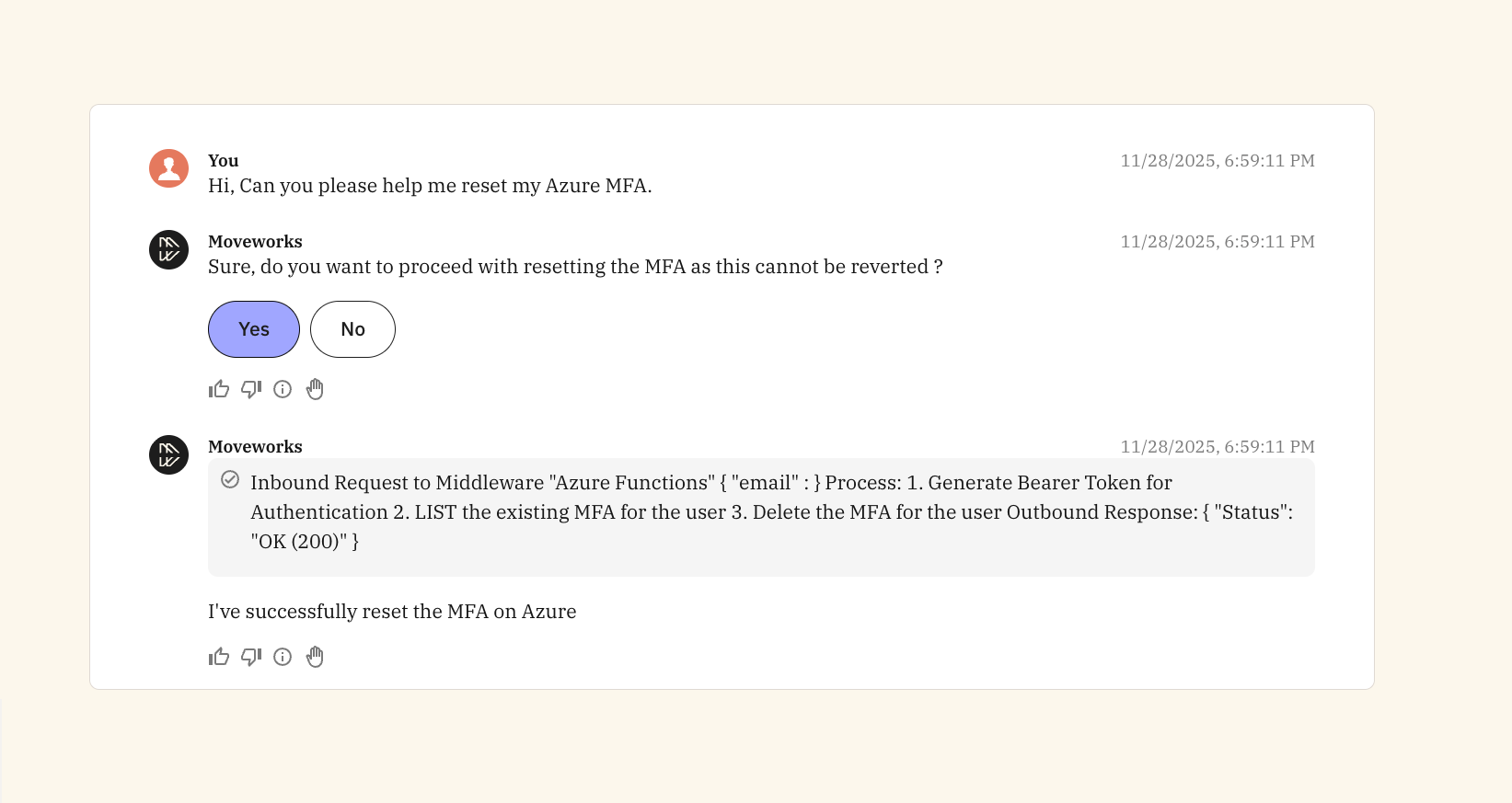
Resetting passwords, provisioning software, fixing VPN issues — once manual, now automatic.
Agents continuously detect failure patterns like repeated login errors, so they can help to resolve issues before employees file tickets and close cases in ITSM platforms such as ServiceNow or Jira. The business impact is lower ticket volume, faster MTTR, and IT teams free to focus on infrastructure innovation.
HR Operations
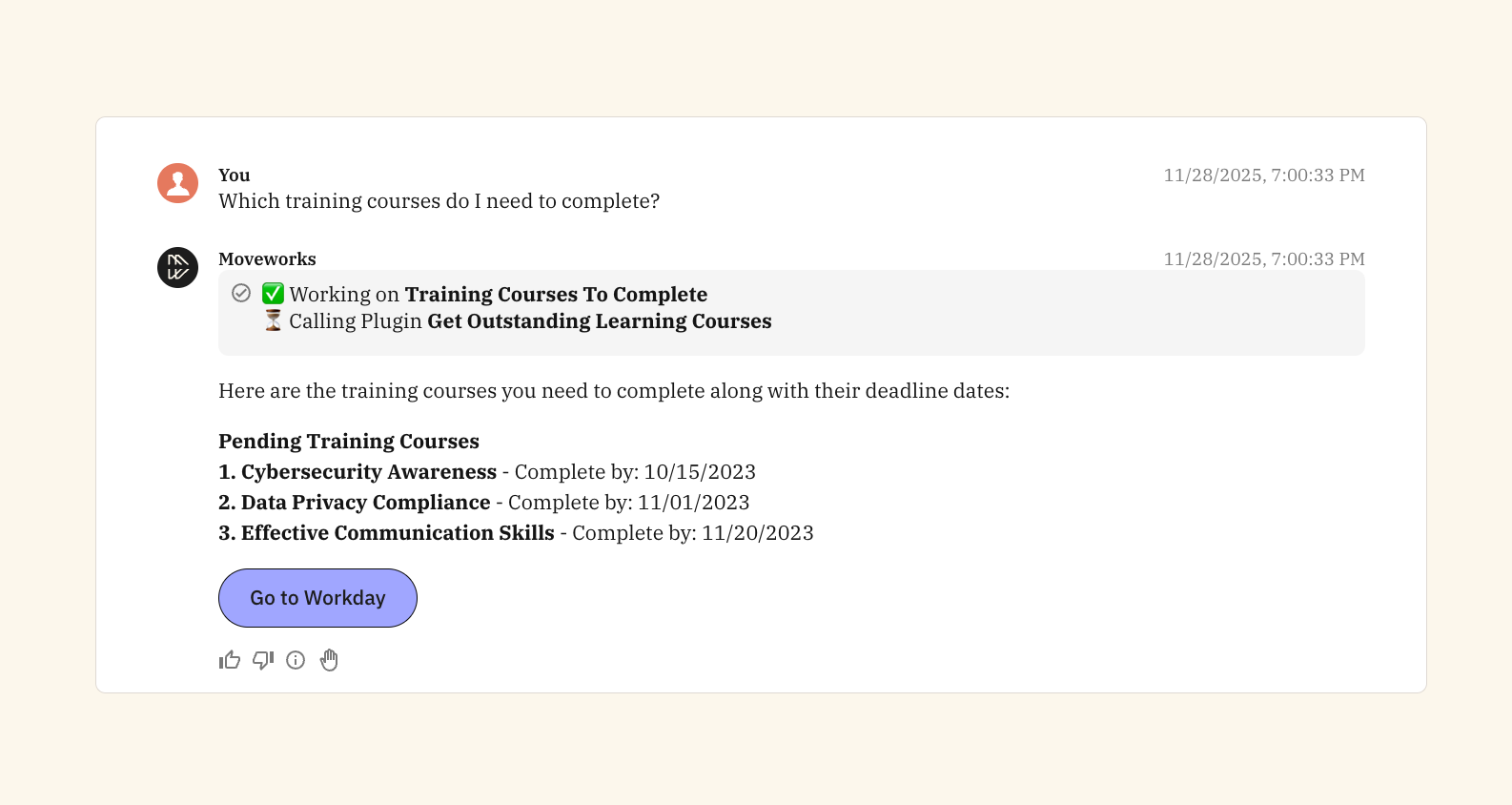
From onboarding and access provisioning to benefits updates and leave extensions, HR AI agents are able to connect Workday, ServiceNow, and identity systems to handle it all. H
R teams can use low-code or partner with IT to rapidly deploy AI agent builders for HR workflows — while employees can use agentic assistants to act on requests directly in web browser, Slack or Teams. The result? consistent experiences across regions, faster cycle times, and happier new hires.
Finance and Procurement
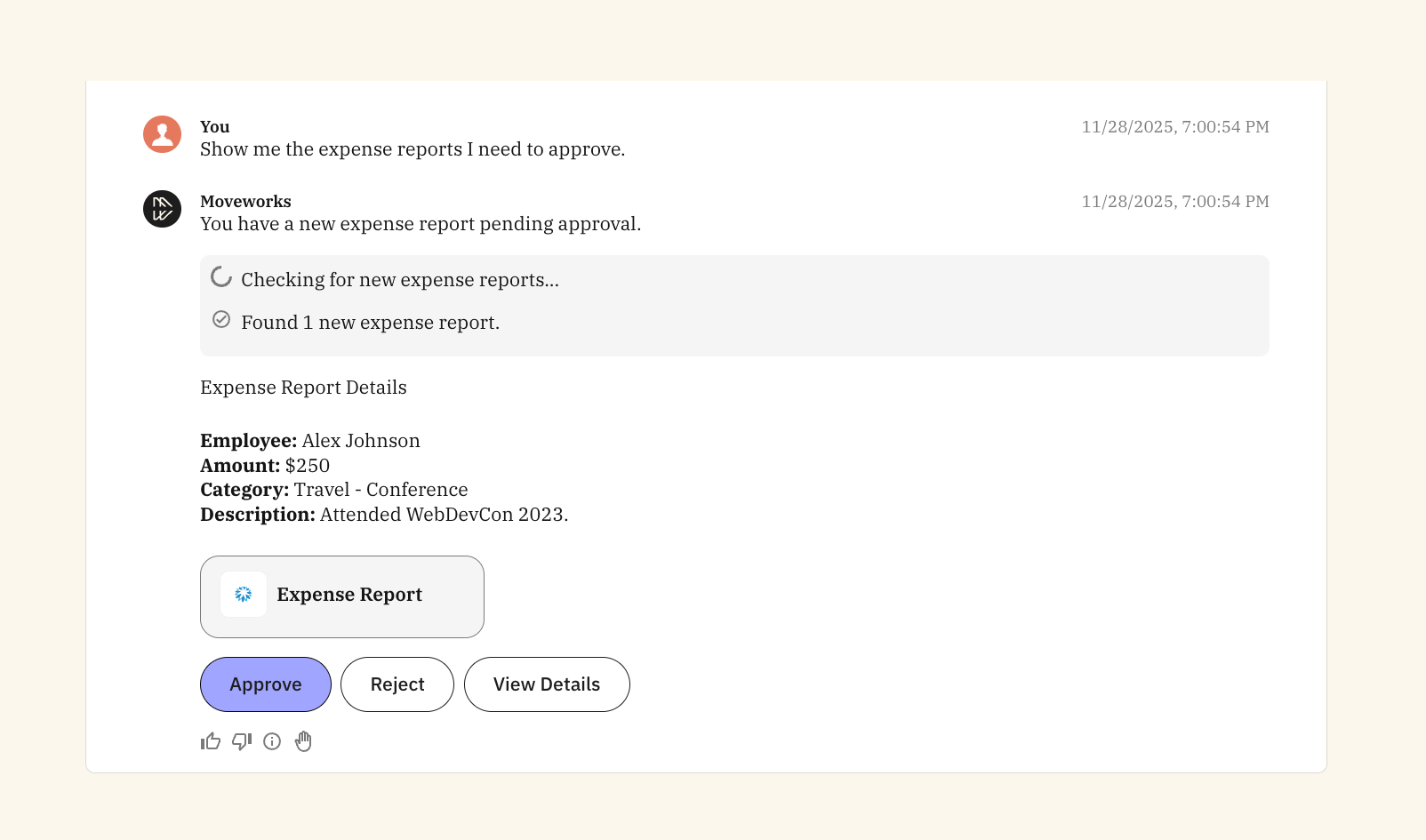
Finance agents interpret context (“approve this invoice,” “check reimbursement status”) and act across SAP, Workday, and Coupa. They validate entries, flag out-of-policy spend, and are able to escalate exceptions—helping to improve accuracy and close speed. Each action is logged for audit, ensuring compliance and traceability.
Customer Operations
In CRM and support environments, agents retrieve entitlement data, verify SLAs, and trigger actions like refunds or contract updates across Salesforce and Zendesk, among other use cases. The payoff: faster responses, reduced backlog, and more consistent customer experiences.
Engineering and IT Operations
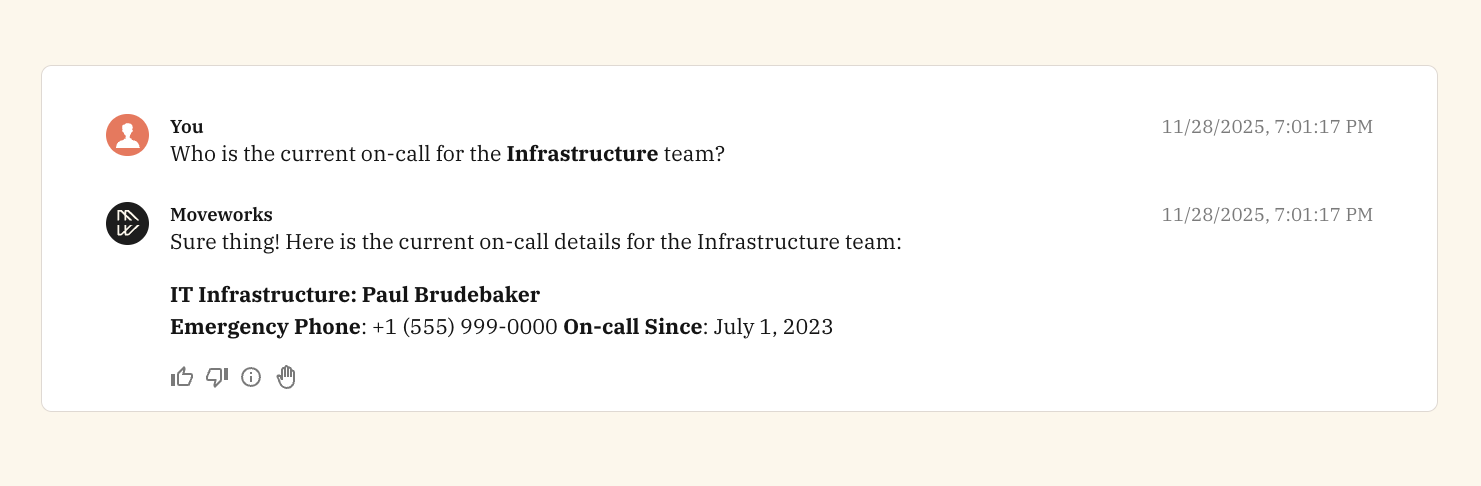
Agents monitor systems, detect anomalies, trigger rollbacks, and alert the right teams automatically in Slack or Jira. By reasoning over live telemetry, they are able to prioritize critical incidents, cut alert fatigue, and shorten recovery times. Engineering leaders can even build custom observability agents in Agent Studio to keep environments stable as code ships faster.
Why enterprises can’t afford to wait
Agentic AI adoption isn’t a someday initiative—it’s becoming the new competitive baseline. Enterprises that move first with agentic AI are already realizing noticible efficiency gains.
For example, a PwC analysis shows that 66% of organizations that have adopted AI agents report increased productivity and 57% noted cost savings. Similarly, another report found 80% of executives say agentic AI has already produced a significant or total transformation of their operations.
Agentic AI turns scattered automations into a connected network of reasoning systems—a foundation where work flows naturally across departments. It reasons across systems, adapts to new inputs, and keeps teams moving for massive productivity at scale.
The future of agentic AI
Agentic AI is only at the beginning of its enterprise story. Over the next few years, agents will become even more widely used in multi-agent ecosystems that reason together, coordinating across HR, IT, Finance, and Operations.
As McKinsey projects, companies that operationalize this interconnected network of reasoning systems will be able to achieve exponential efficiency gains, with AI acting as an always-on partner for every function.
At the same time, governance and transparency will define success. Organizations that combine open architectures, responsible-AI frameworks, and human oversight will be able to turn agentic AI successful use cases into a scalable operating layer for the business.
The next frontier isn’t just AI—it’s agentic AI that works together.
Start building your company’s future with agentic AI
Moveworks connects to all your systems — from HR and IT to Finance, Procurement, Engineering, Sales, Marketing, and beyond — with an intuitive, AI-native experience that meets employees where they work, and in over 100 languages.
- Search and action in one intuitive workspace
- Powered by a superior Reasoning Engine
- Easy to add and build AI agents for any use case
- AI Agent Marketplace with pre-built templates
Get started and speed up time-to-deploy with a curated library of hundreds of AI agents to uplevel all your business applications with AI agents that are customizable and free to install.
Moveworks helps turns all your employees into an agentic AI power users — giving enterprises an AI platform that makes work flow.
Work doesn’t wait—neither should your AI
Agentic AI has already redefined how enterprises operate. Moveworks makes it practical, measurable, and secure. See the Moveworks AI Assistant in action or request a demo to experience how agentic AI gets work done—instantly.
Frequently Asked Questions
Agentic AI refers to autonomous systems that can make decisions, plan multi-step workflows, and act independently toward goals.
You've already likely interacted with AI agents when using an IT agent to auto-resolve a service ticket by diagnosing the issue and applying a fix or maybe there was an HR agent that helped onboard a new employee by provisioning accounts and assigning training.
Unlike generative AI which is reactive and produces a single output, Agentic AI builds on this using Large Language Models (LLMs) as a “brain” to reason, choose and use external tools, and self-correct—working toward its goal with minimal human oversight.
Agentic AI goes beyond both traditional and generative AI by combining goal orientation with contextual reasoning and autonomous execution.
While traditional AI follows fixed rules and generative AI produces one-off outputs, agentic AI can set objectives, plan across systems, self-correct, adapt, and take action independently — essentially turning intelligence into initiative.
Agentic AI brings together traditional AI’s goal-setting with generative AI’s reasoning to create systems that act on their own.
Using an LLM as its ‘brain,’ it plans, self-corrects, and completes complex, multi-step tasks — interacting with tools and environments without constant human input.
It builds on the fixed rules of traditional AI and the one-shot output of generative AI to deliver far more autonomous, adaptive, and scalable automation.
For enterprises, agentic AI enables end-to-end automation of complex business processes—like procurement or ticket resolution—delivering major gains in efficiency and cost savings by freeing employees from repetitive, time-consuming workflows.
Common use cases for agentic AI involve end-to-end automation of complex business processes. These include autonomous customer service agents that resolve tickets without human handoffs, proactive cybersecurity agents that detect and neutralize threats in real-time, and AI assistants that manage multi-step workflows in HR, finance, and supply chain management like dynamic pricing or autonomous procurement. Explore 100+ examples in our agentic AI use-case guide.
Agentic AI is an advanced form of AI that focuses on autonomous decision-making and action. It is implementing using AI agents, which leverage a powerful large language model (LLM) as their central reasoning engine.
These systems are deployed on an enterprise agentic AI platform (like Moveworks) that serves as an orchestrator. This platform manages the complex, multi-step workflow and allows AI agents to access necessary company tools and systems (like applications, databases, or files via APIs) and use a memory to track progress.
The platform manages the AI agents' step-by-step process: it plans the actions, uses tools for execution, and fixes its own mistakes to reliably and safely complete complex tasks for the business.
Security is foundational. Moveworks security practices include encrypting data, applying strict access controls, logging actions, and compliance with standards and regulations including SOC 2, ISO 27001, and GDPR —making actions explainable, auditable, and designed for compliance.